
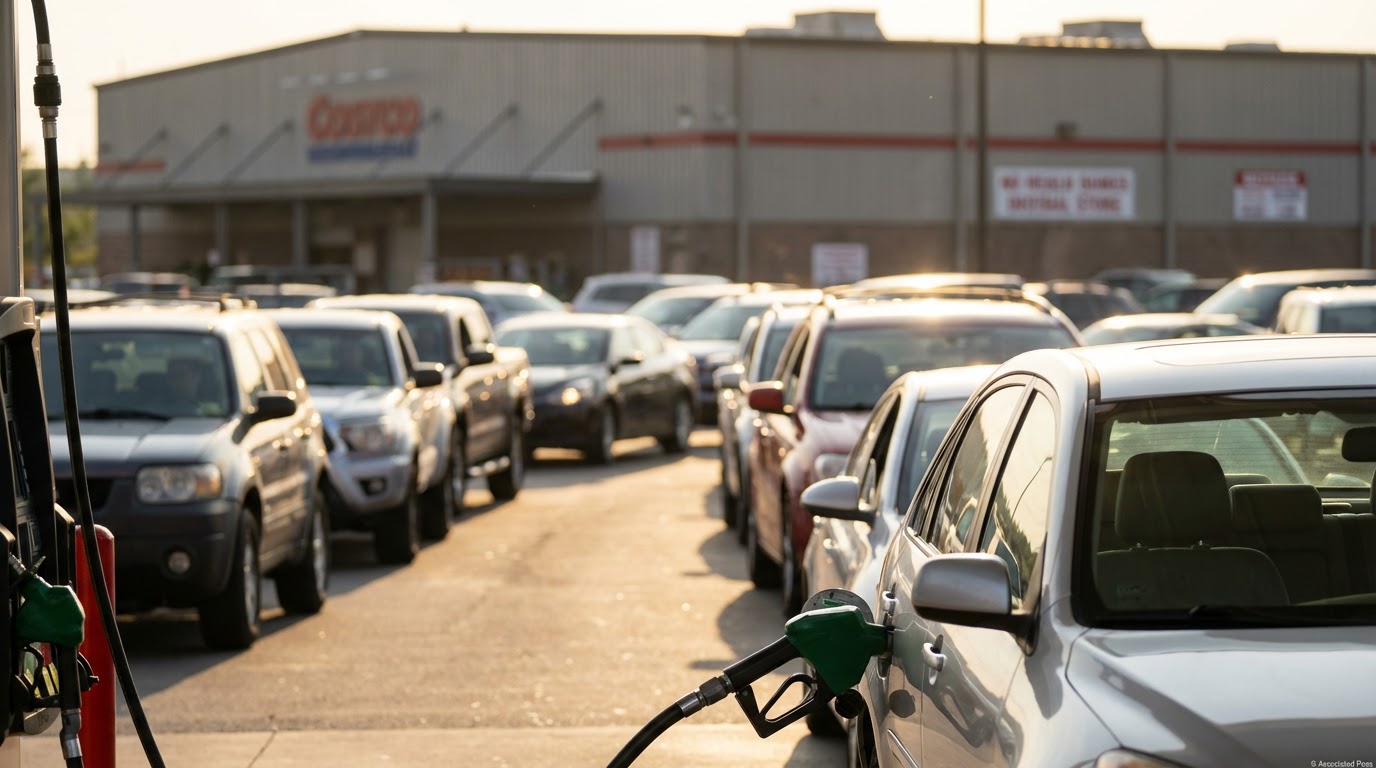
Why the EPA's 2026 Rollback Makes Your Costco Membership More Valuable Than Ever

Why the EPA's 2026 Rollback Makes Your Costco Membership More Valuable Than Ever
Last Thursday, the American auto industry got new marching orders. On February 12, 2026, EPA Administrator Lee Zeldin finalized the repeal of the 2009 'Endangerment Finding,' wiping out federal greenhouse gas emissions standards for vehicles through 2027 and beyond.
The upfront numbers look good. The Trump administration estimates this move will cut the average cost of a new vehicle by approximately $2,400. But for a family watching its budget, the sticker price is only half the math.
Cars might get cheaper to buy, but they are about to get much more expensive to drive. Critics project this rollback could cost drivers up to $310 billion in higher fuel consumption over the long haul. This tension—cheaper goods versus higher operating costs—creates a volatile market where specific shopping habits, particularly at Costco, offer a measurable financial edge.
Key Takeaways
Sticker Price vs. Pump Price:** The EPA repeal targets a ~$2,400 drop in vehicle costs, but long-term fuel expenses are projected to rise significantly. The California Split:** California's refusal to adopt federal standards could fracture the market, keeping gas prices high in specific regions. Gas Arbitrage is Essential:** With Costco Gas prices beating state averages by nearly $1.00/gallon in places like Fullerton, membership acts as a necessary inflation hedge. Volatility Means Refunds:** Economic shifts cause retail price fluctuations. Automated tracking of Costco purchases ensures you catch price drops the moment they happen.
The $2,400 Promise vs. The Gas Pump Reality
Administrator Zeldin was direct about the repeal: "The Trump EPA is strictly following the letter of the law... delivering consumer choice to Americans." The argument is straightforward: remove expensive 'green' mandates, and manufacturers can pass savings to buyers. Saving $2,400 on a new sedan is real money—a year's worth of groceries for some households.
But Peter Huether, a Senior Transportation Research Associate at ACEEE, points to the other side of the ledger: "Strong vehicle standards save drivers money every time they fill up. Canceling the standards means higher costs at the pump." According to ACEEE analysis released immediately following the repeal (February 12, 2026), eliminating these standards erases an estimated $61 billion annually in consumer fuel savings.
If vehicles become less fuel-efficient, your weekly liability increases. This changes the calculus of warehouse club membership. It stops being about bulk toilet paper and starts being about fuel arbitrage—using your membership to bypass the localized inflation at standard gas stations.
Fuel Arbitrage — The practice of exploiting price differences between wholesale club fuel stations and standard retail pumps to offset broader inflationary costs.
The 'California Paradox' Creates a Split Market
The math gets uglier when you look at the map. California isn't playing along. Despite the federal rollback, the state is using its distinct legal waivers to keep stricter standards.
This creates a "California Paradox." Automakers, desperate to avoid building two separate fleets (one for California, one for the rest of the U.S.), might simply ignore the EPA's relaxation and build to California's stricter standard anyway. As Politico reported on February 18, California could end up regulating the entire country by default.
California Paradox — A market phenomenon where a single state's regulatory standards force national manufacturers to adhere to stricter rules despite federal deregulation, often leading to supply chain inefficiencies and price variance.
For your wallet, this means uncertainty. And uncertainty usually leads to price swings.
In California, gas prices remain high due to state-specific environmental taxes—averaging $4.77/gallon compared to the national average of ~$3.17. Brian Jones, the State Senate Minority Leader, noted the fatigue among his constituents: "That gas tax is going to push me out of the state."
For Costco members, this spread is the opportunity. Data from February 6, 2026, shows Costco Gas in Fullerton, CA, priced at $3.79/gallon—nearly a full dollar cheaper than the state average. If you fill up weekly, that membership pays for itself in under two months solely on fuel savings. According to GOBankingRates (2025), the average Costco member saves between $218 and $364 annually on fuel alone. That figure will likely rise as the market splits and widens the gap between wholesale and retail pricing.
Volatility is the New Normal for Big-Ticket Prices
When federal policy shifts this drastically, supply chains shudder. If shipping costs change due to fuel prices, or if inventory gluts happen because automakers miscalculate demand, retail prices on related goods—tires, automotive accessories, and even electronics—will bounce.
Costco is famous for its 30-day Price Adjustment policy, but few shoppers realize how responsive it is to these macroeconomic shifts. If a set of Michelin tires drops in price 20 days after you bought them because of a supplier rebate triggered by this new policy landscape, you are owed money back.
Price Protection Window — The specific timeframe (typically 30 days at Costco) during which a retailer guarantees to refund the difference if an item's price drops after purchase.
Most shoppers leave this cash on the table. They assume the price they paid is final. In a stable economy, prices stay flat. In a volatile one—like the one created by abrupt deregulation—prices move.
How to Inflation-Proof Your Costco Runs
To save money at Costco in 2026, you have to do more than look for the "manager special" or dig for Costco clearance hacks. You need a system that assumes prices will change after you leave the store.
1. The .97 Code is Your Signal
Veteran shoppers know the codes. If you see a price ending in .97, that item is on clearance. It will not be restocked. If you see an asterisk (*) on the price tag, that item is pending deletion.
Code .97 — A pricing signal used by Costco indicating an item is on clearance and will not be restocked, often marking the lowest possible price point.
Why this matters now: With the auto industry in flux, expect accessories and garage items to hit these clearance codes faster as inventory rotates.
2. Stop Manual Tracking
Monitoring the price of a television or a set of tires for 30 days manually is a part-time job. You have to check the website, visit the store, or scan flyers daily. Most people just don't do it.
This is where automatic Costco savings tools help. Services like CostRefund act as a digital auditor. You scan Costco receipts, and the system monitors those specific items against real-time warehouse data. If the price drops, you get an alert.
3. Know the Instacart Premium
If you use Instacart Costco pricing vs in-store shopping to save time, be aware of the markup. Instacart prices are often 10-15% higher than warehouse prices. A December 2025 study by Consumer Reports found that Instacart markups can reach as high as 23% on specific items, potentially costing a family of four an extra $1,200 annually. In a world where gas savings are your primary defense against inflation, driving to the warehouse is mathematically superior to delivery—provided you fill up the tank while you are there.
| Feature | Standard Shopper | CostRefund Member |
|---|---|---|
| Price Tracking | Manually checking receipts and websites | Automated monitoring for 30 days |
| Refund Method | Filling out the Costco online price adjustment form manually | Receiving alerts to claim cash instantly |
| Clearance Strategy | Luck (hoping to see a .97) | Data-driven (knowing when drops happen) |
| Missed Savings | High (average shopper misses 60% of eligible drops) | Near Zero |
Why Automating Price Adjustments is Essential Right Now
The EPA's rollback is a massive macroeconomic signal that prices—for cars, fuel, and shipped goods—are going to be unstable. Stability favors the seller; volatility favors the buyer who pays attention.
When you use tools to track Costco price drops, you aren't just saving a few dollars; you are insulating your budget against market confusion. If the price of goods drops because the market softens, you get a refund. If the price stays high, you bought early.
It is the closest thing to a financial guarantee you can get in retail. And unlike ShopSavvy alternative apps that just compare current prices, a dedicated adjustment tracker looks backward at what you already bought to recover cash you already spent.
Frequently Asked Questions
1. Does Costco's price adjustment policy cover gas? No, fuel is excluded. The Price Adjustment policy applies to merchandise sold in the warehouse and online (electronics, furniture, clothing). Fuel prices are variable and change daily based on market rates. However, with Costco Gas often priced 20-30 cents below local averages (and up to $1.00 in high-tax zones like California), the savings are immediate rather than retroactive.
2. How do I claim a refund if a price drops? You must request the credit within 30 days of purchase. For warehouse purchases, you typically need to visit the membership counter with your receipt. For online orders, you can use the Costco online price adjustment form. However, spotting the drop is the hard part—using a service to scan Costco receipts automates the detection phase so you only go to the counter when you know money is waiting for you.
3. Will the EPA rollback make Costco tires cheaper? Possibly, but not guaranteed. The Endangerment Finding repeal changes the cost structure for automotive manufacturing and transport. If supply chain costs decrease, those savings often trickle down to tires and auto parts. Conversely, if California's stricter rules fracture the market, prices could fluctuate wildly. Tracking your tire purchase for the full 30-day window is the safest bet to capture any volatility-induced drops.
4. What are the 'manager special' price adjustment rules? Costco managers have discretion over markdowns, often labeling them as "Manager's Specials" (usually ending in .00 or .88). Technically, Costco's corporate policy allows for adjustments on these items if the price drops further within 30 days, but it can vary by warehouse. Having a digital record of your purchase and the current price helps make your case at the service desk.
Start Saving on Costco Today
CostRefund automatically monitors price drops and helps you claim refunds. Download the app and never leave money on the table again.
Download CostRefund