
The $38 Billion Warehouse War: How ICE's Real Estate Spree Could Squeeze Your Costco Refund

The $38 Billion Warehouse War: How ICE's Real Estate Spree Could Squeeze Your Costco Refund
Key Takeaways
The Supply Shock:** The Department of Homeland Security's $38.3 billion "Detention Reengineering Initiative" is pulling more than 12 million square feet of prime industrial space off the market. That isn't just a real estate story; it's a supply constraint that hits retailers like Costco where it hurts. The Premium Problem:** The federal government is paying premiums of up to 40% above market rate—think $158 million for a single retrofit in Merrimack, NH. When retailer logistics costs spike, inventory turnover has to speed up. Heavy Goods Hardest Hit:** Large items like furniture and 85-inch TVs are space hogs. In this environment, they become liabilities. Expect "flash liquidations" rather than the slow, predictable clearance cycles of the past. The Receipt Reality:** With pricing volatility expected to jump in Q2 2026, manual receipt checks are a gamble. Automated tracking is the only reliable way to catch flash price drops the moment they happen.
February 2026 brought a strange sight to towns like Social Circle, Georgia, and Byhalia, Mississippi. You had progressive activists standing next to deep-red Trump voters, both looking at the same problem: the federal government's massive appetite for industrial real estate.
Headlines usually focus on the political friction of ICE's new $38.3 billion "Detention Reengineering Initiative" (DRI). But there is a quieter, economic story unfolding here that will likely end up costing you money. The federal government isn't just buying land. They are aggressively acquiring the exact same type of large-scale warehouse facilities—Class A industrial space—that power the supply chains of Costco, Amazon, and Walmart.
When the government enters a market with an essentially unlimited checkbook—paying $87.4 million for a single facility in Berks County, Pennsylvania—it bends the reality for everyone else. For the smart shopper, this geopolitical shift signals a change in retail logistics. It alters how you find deals, when you buy big-ticket items, and why tracking your receipts is about to become more important than ever.
The "Prime" Detention Plan: A Market Shock
To get why your local Costco manager is stressing about floor space, look at the scale of the purchasing power competing against them. As of February 13, 2026, DHS documents released by New Hampshire Governor Kelly Ayotte outline a plan to acquire 16 regional processing centers and 8 large-scale warehouses. The goal? Increasing detention capacity to 92,600 beds by November 30, 2026.
Todd Lyons, Acting Director of ICE, didn't mince words at the 2025 Border Security Expo. He described the goal as creating an operation that runs like "[Amazon] Prime, but with human beings."
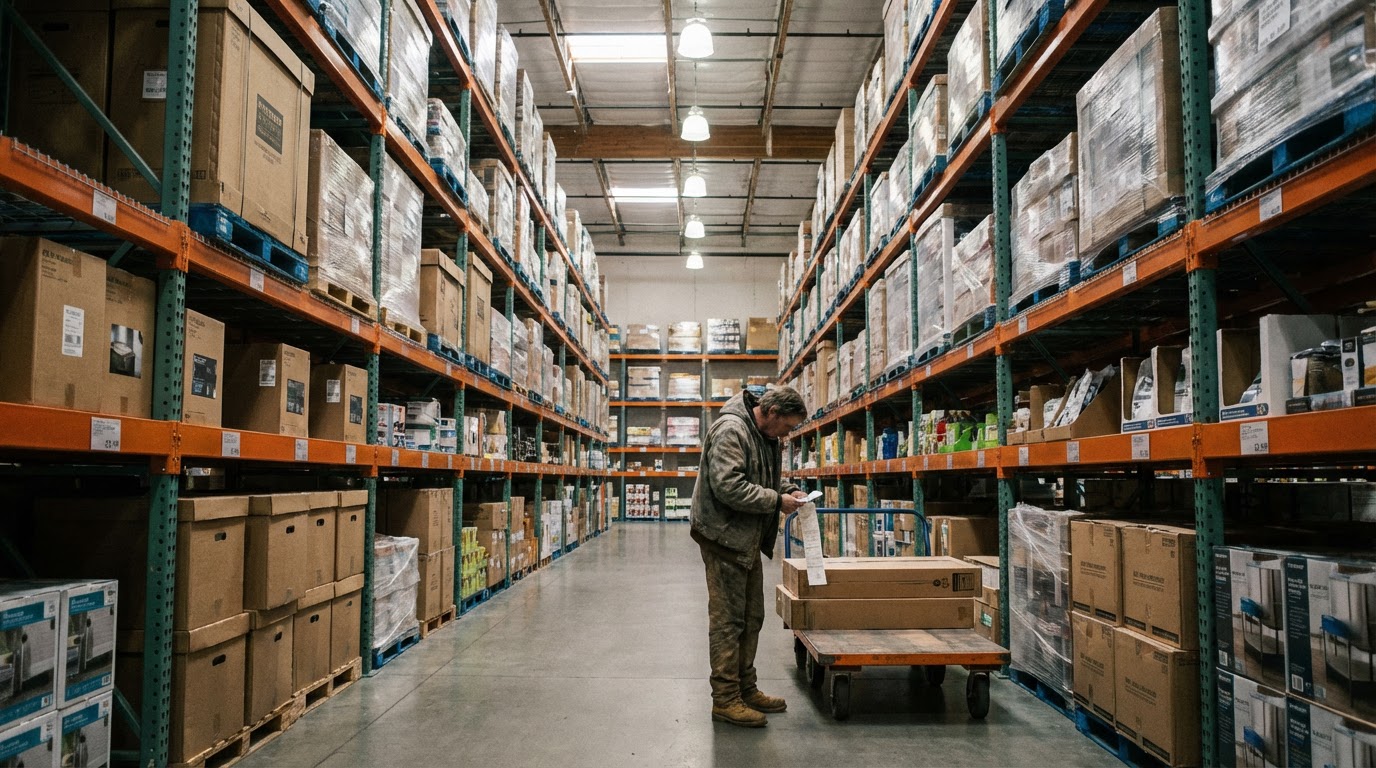
This isn't just a metaphor. The agency is literally competing for the same physical infrastructure that powers e-commerce and wholesale clubs. In Merrimack, New Hampshire, Governor Ayotte's released documents show a single facility retrofit at 50 Robert Milligan Parkway would cost $158 million. These are industrial behemoths. The Surprise, Arizona, facility alone is 400,000 square feet—roughly the size of three Costco warehouses.
When 24 such massive facilities vanish from the commercial real estate market in a single fiscal quarter, the remaining inventory gets expensive. Fast.
The Ripple Effect on Retail Pricing
Costco runs on margins that would make a traditional retailer panic—typically around 11% to 15%. Traditional retail sits closer to 25-50%. Costco pulls this off by turning inventory over rapidly and keeping storage costs close to zero. The warehouse is the store.
But Costco also relies on a network of distribution centers to feed those warehouses. When industrial vacancy rates drop and rents rise because a massive new buyer (ICE) is absorbing supply, Costco's overhead climbs.
Here is the math for the budget-conscious family:
- The Space Tax: Higher storage costs mean retailers can't afford to let products sit. The "manager's special"—often indicated by a price ending in .00 at Costco—might happen sooner, but with less fanfare. They need the floor space.
- The Tuesday-Friday Spread: Retailers may adjust prices more frequently to offset fluctuating logistics costs. A TV might be $899 on Tuesday and $949 on Friday depending on shipping container availability. I've seen volatility like this before, but rarely on this scale.
- The Sticker Shock: Eventually, persistent overhead increases show up in the sticker price of goods, particularly on low-margin bulk items.
Senator Roger Wicker (R-MS) noted recently that "converting this industrial asset into an ICE detention center forecloses economic growth opportunities." For shoppers, it forecloses the cheap storage that keeps bulk prices low.
Why Bulky Items Are Most Vulnerable
If you plan to buy a sectional sofa, a patio set, or a large appliance in 2026, pay attention. These items are space hogs. In a logistics environment where every square foot of warehouse space is being bid up by federal contractors using funds from the One Big Beautiful Bill Act, storing bulky inventory becomes a liability.
We anticipate two shifts in how Costco and similar clubs handle big-ticket items:
Flash Clearance:** Instead of holding last season's patio furniture for months, stores might liquidate it aggressively to free up the vertical steel racking. This creates incredible buying opportunities, but only if you are watching closely. Online-Only Shifts:** You may see more large items shift to "Direct to Consumer" shipping rather than being stocked in-warehouse, often with a baked-in shipping premium.
This volatility is exactly where the Costco online price adjustment form becomes useful. If a retailer drops the price of that refrigerator by $200 three weeks after you bought it because they need to clear the warehouse, you are entitled to that difference. You just have to ask.
The "NIMBY" Factor and Supply Chain Chaos
The wild card here is local resistance. In places like Ashland, Virginia, and Oklahoma City, property owners canceled sales to DHS after public pushback. This forces the government to look elsewhere, keeping the industrial real estate market in a state of flux.
Uncertainty creates opportunity. When retailers get nervous about logistics, their pricing algorithms often react erratically. We have seen instances where identical items at nearby warehouses have price discrepancies of over 15% simply based on local inventory levels.
Scan your receipts. In this chaotic market, the difference between the price you paid and the price on the floor can shift in days, not weeks. Remember, Costco's internal systems track your purchase history, but they do not automatically alert you when you overpaid.
Action Plan: Adapting Your Shopping Strategy
The old rules about waiting for seasonal clearance cycles? They might be on pause while this logistics crunch plays out. Here is how to adapt so you don't leave money on the table:
1. Don't wait for the ".97"
Traditionally, bargain hunters wait for the price tag to end in .97—Costco's code for clearance. But with tighter storage, inventory might disappear entirely before it hits deep clearance. If you see a price you like, buy it. You have 30 days of price protection. If it goes to .97 later, you can claim the difference.
2. Let software watch the price
Manual tracking works if you buy five items a year. It fails if you buy groceries, clothes, and electronics weekly. With tools to track Costco price drops, you remove the human error. Services like CostRefund monitor the item after you buy it, alerting you if the retailer's logistics struggle leads to a sudden price drop.
3. The item number trick
If you live near multiple warehouses, use the item number to check stock and price at the membership counter. The supply squeeze is regional. A warehouse in a county fighting an ICE facility might have different storage pressures—and different prices—than one 20 miles away.
Frequently Asked Questions
How does a warehouse shortage affect my ability to get a price adjustment?
A warehouse shortage often leads to higher price volatility. Retailers may drop prices suddenly to clear space for new inventory. This actually increases the likelihood of a price drop occurring within your 30-day window, making it even more critical to monitor your past purchases for eligible refunds.
Can I still get a price adjustment if an item goes out of stock?
Generally, Costco requires the item to be in stock at the time you request the adjustment. However, policies can vary by location and manager discretion. If you use ShopSavvy alternative apps or CostRefund to catch the price drop the moment it happens, you maximize your chances of claiming the refund before stock runs out.
Does this affect online purchases at Costco.com?
Yes. The Costco online price adjustment form handles digital purchases, which often come from different distribution centers than store inventory. As e-commerce warehouses face the same real estate squeeze from federal acquisitions, online pricing may fluctuate more dynamically than in-store pricing. Note: You cannot adjust an online purchase at the physical warehouse counter.
What is the best way to track price drops without checking the store daily?
The most efficient method is to scan Costco receipts into an automated tracking tool immediately after purchase. These tools digitally audit your purchase history against daily price changes, ensuring you get an alert the moment a refund is possible without you having to drive back to the warehouse.
Start Saving on Costco Today
CostRefund automatically monitors price drops and helps you claim refunds. Download the app and never leave money on the table again.
Download CostRefund